 Skip to content


Choosing a private event catering service involves more than finding a menu that looks appealing. The right catering team can have a noticeable impact on the food, service, presentation and overall experience for your guests.
For the host, good event catering can also make the event easier to manage. When the food preparation, service and practical details are handled properly, you can spend more time enjoying the occasion and less time worrying about what needs to happen next.
Whether you’re planning an engagement party, milestone birthday, anniversary, family gathering, cocktail party or private function, it’s worth comparing caterers based on what your event actually needs rather than simply choosing the cheapest quote.
Start by Defining Your Event
Before contacting an event caterer, establish the basic details of your event. A caterer will need this information to recommend suitable menus, staffing, and service options.
Start by considering:
- What type of event are you hosting?
- When and where will it take place?
- How many guests are you expecting?
- How long will the event run?
- Is the atmosphere formal, relaxed or somewhere in between?
- Will it be indoors or outdoors?
- Do you want guests seated for a meal or moving around and socialising?
For example, a relaxed backyard birthday may suit a BBQ, grazing menu, or casual buffet, while an anniversary dinner at a hired venue may work better with a structured plated menu.
Your venue can also influence the catering setup. Available kitchen facilities, access, power, refrigeration, serving areas and parking can all affect how food is prepared and served.
Having these details ready makes it easier for an event caterer to understand your requirements and provide an appropriate recommendation.
Consider the Catering Style You Want
There are several catering options available for private functions, and each creates a different experience for guests.
- Cocktail-style catering works well when the focus is on conversation and movement rather than a formal seated meal. Guests can mingle while enjoying a selection of smaller dishes.
- Canape catering is another popular choice for engagement parties, celebrations and networking-style gatherings. A selection of hot and cold canapés can be served throughout the event without requiring guests to sit down for a full meal.
- Shared or grazing-style menus can create a more relaxed and social atmosphere. Food is presented for guests to share, making this style particularly suitable for informal celebrations.
- Buffet catering gives guests a choice of dishes and can work well for larger gatherings. However, enough space is needed for the buffet setup, and the service area needs to be practical for guest movement.
- Plated catering provides a more formal dining experience, with courses served directly to guests at their tables. It can suit milestone birthdays, anniversaries and other occasions where a structured meal is part of the event.
- Food stations can add variety and encourage guests to move around the venue. Depending on the event, stations may focus on particular dishes or styles of food.
- BBQ or casual catering can be a good fit for outdoor celebrations and relaxed family gatherings.
There is no single best option. Think about how you want guests to interact, whether seating is available and how formal you want the event to feel.
Look at the Menu Options
When comparing a catering menu, don’t just look at how many dishes are listed. Consider whether the food suits your guests and the type of event you’re planning.
Look for a good balance of flavours, textures, and options. Seasonal ingredients may also be worth considering, particularly if you want the menu to reflect the time of year.
Ask about:
- Menu variety
- Portion sizes
- Seasonal ingredients
- Menu flexibility
- Customisation
- Children’s options where relevant
- Cultural preferences
- Dietary requirements
Some catering companies offer set catering packages, while others can build a menu around your event.
If you already have a particular theme, family tradition, or style of food in mind, ask whether the menu can be adapted. A good discussion before booking can help you understand what is possible within your budget and event format.
Ask About Dietary Requirements
Dietary requirements should be discussed early rather than treated as an afterthought.
Common requirements can include vegetarian, vegan, gluten-free, and dairy-free options, along with food allergies and other dietary preferences.
When speaking with a caterer, explain your requirements as clearly as possible. For allergies in particular, ask how the catering team manages allergen information, preparation, and service.
It’s important to understand that catering teams may work with a range of ingredients and food preparation areas, so guests with serious allergies should communicate their requirements clearly and discuss the caterer’s processes before the event.
The aim is to make sure suitable options are considered during menu planning rather than trying to make last-minute changes on the day.
Check the Caterer’s Experience
Experience matters, particularly when an event involves a large number of guests or more complex service requirements.
Ask whether the caterer has worked on events similar to yours. Relevant experience might include:
- Similar guest numbers
- Similar event styles
- Your chosen venue
- Formal or casual functions
- Large private celebrations
- Cocktail-style events
- Seated dining
- Outdoor functions
A caterer familiar with your type of event is more likely to understand the practical requirements involved. They may also be better prepared to manage timing, food service, guest movement and changes that can occur during an event.
Experience with a particular venue can be useful as well. Familiarity with access arrangements, kitchen facilities and available service areas can make planning easier.
Understand What’s Included in the Quote
A catering quote can look competitive until you discover that important services or equipment are charged separately.
Before comparing prices, check exactly what each quote includes.
Depending on the caterer and event, this may include:
- Food
- Chefs
- Catering staff
- Waitstaff
- Food preparation
- Setup
- Event service
- Pack-down
- Crockery
- Cutlery
- Glassware
- Tables or serving equipment
- Delivery
- Travel
- Cleaning
Not every catering service will include all of these items, and some may not be required for your event.
Ask about additional charges as well. For example, travel, extended service hours, equipment hire, or changes to the final guest numbers may affect the final cost.
A clear catering quote should make it reasonably easy to understand what you’re paying for and which services are included.
Think About Staffing and Service
Food is only one part of the guest experience. The way it is served can make a significant difference to how smoothly an event runs.
Ask how many staff will be attending and what their responsibilities will be.
Depending on your chosen service style, catering staff may be responsible for serving food, replenishing buffet dishes, passing canapés, clearing tables or assisting guests.
For a plated dinner, you may need a different level of staffing compared with a casual buffet or BBQ.
It’s also worth considering how the catering team will coordinate with other event suppliers. Timing can become important when catering needs to work around speeches, entertainment, photography or other scheduled activities.
The right level of event staff should reflect the size, format, and expectations of your function.
Consider Food Presentation
Catering also contributes to the visual side of an event.
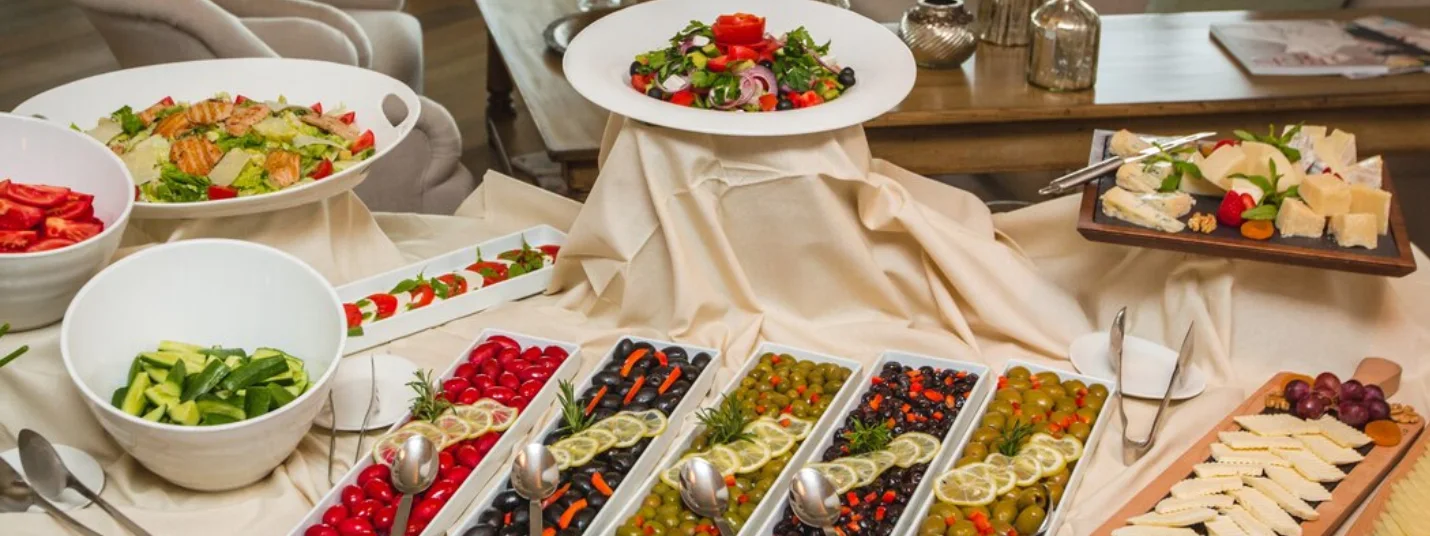
Food presentation can range from carefully plated meals to attractive grazing displays, canapé presentation, buffet styling, and interactive food stations.
Consider whether the presentation suits the overall atmosphere you’re trying to create. A formal dinner may call for a different approach from a relaxed outdoor celebration.
You can also ask to see photographs from previous catered events. This gives you a better idea of how the caterer approaches the presentation and whether their style suits your event.
A good presentation doesn’t need to be complicated. The food should look appealing while still being practical for guests to access and enjoy.
Ask the Right Questions Before Booking
A short conversation with a caterer can help you determine whether they’re a good fit for your event.
Consider asking:
- Have you catered for events like mine before?
- Can the menu be customised?
- How do you handle dietary requirements and food allergies?
- How many staff will attend the event?
- What is included in the catering quote?
- Are setup and pack-down included?
- Do you provide serving equipment?
- Can you cater at my chosen venue?
- When does the final guest number need to be confirmed?
- What happens if the event details change?
You can also ask about menu tastings where appropriate, payment schedules, cancellation terms and the process for confirming final event details.
The answers should give you a clearer idea of what to expect and help identify any potential issues before you commit.
Don’t Choose a Caterer Based on Price Alone
Price is naturally an important consideration, but the cheapest quote isn’t necessarily the best value.
Two caterers may offer very different prices because their quotes include different levels of food, staffing, equipment and service.
When comparing quotes, consider the complete package. Look at food quality, menu flexibility, experience, staffing, presentation, inclusions and reliability alongside the price.
Think about what your guests will actually experience on the day.
A slightly different catering cost may be worthwhile if it provides a menu that better suits your guests, appropriate staffing and a service style that works with your venue and event schedule.
The goal isn’t necessarily to find the cheapest option. It’s to find a caterer that offers the right combination of food, service and support for your budget.
Choose a Caterer That Understands Your Event
The best catering choice is one that fits the event you’re actually planning.
Think about your guests, the atmosphere you want to create, the venue, your preferred menu and how involved you want to be on the day. A caterer should be able to understand these requirements and explain the available options clearly.
For private event catering, a useful initial conversation can help you work through guest numbers, menu preferences, dietary requirements, service style and practical considerations before you make a decision.
Edge Hospitality can help you discuss the requirements of your event and explore catering options that suit your occasion, venue and guests.
Plan Your Event Catering With Confidence
Choosing a caterer doesn’t have to be complicated. By defining your event requirements, comparing menu and service options, checking what’s included, and asking the right questions, you can make a more informed decision.
If you’re planning a private function in Melbourne and would like to discuss your catering requirements, Edge Hospitality can help you explore suitable menu and service options based on your event, guest numbers and venue. Call 0414 866 448 or email events@edgehospitality.com.au to discuss your event and catering requirements.
Frequently Asked Questions
Start by considering your event type, guest numbers, venue, budget, and preferred service style. Then compare caterers based on menu options, experience, staffing, inclusions, and customer feedback rather than price alone.
Ask about menu customisation, dietary requirements, staffing, venue suitability, setup and pack-down, equipment, final guest numbers, pricing, and what is included in the quote.
A quote may include food, chefs, catering staff, service, setup, pack-down, equipment, delivery, and cleaning. Always check the inclusions and ask about additional charges.
The amount of food depends on factors such as guest numbers, event duration, catering style, and whether food is being served as a main meal or alongside other options. Your caterer can help determine appropriate quantities.
It depends on the event and guest experience you want. Cocktail and canapé catering suits social events, while buffet, shared dining, or plated meals may be better suited to events where food is a more structured part of the occasion.
Discuss dietary requirements early and provide clear information about vegetarian, vegan, gluten-free, allergy-related or other needs. Ask the caterer about their food preparation and allergen-handling processes.
It’s best to start the conversation as early as possible, particularly for larger events, popular dates, or functions requiring more detailed menu and staffing arrangements. Your caterer can advise on the appropriate planning timeframe for your event.